Sudbury Basin Project
About the Project
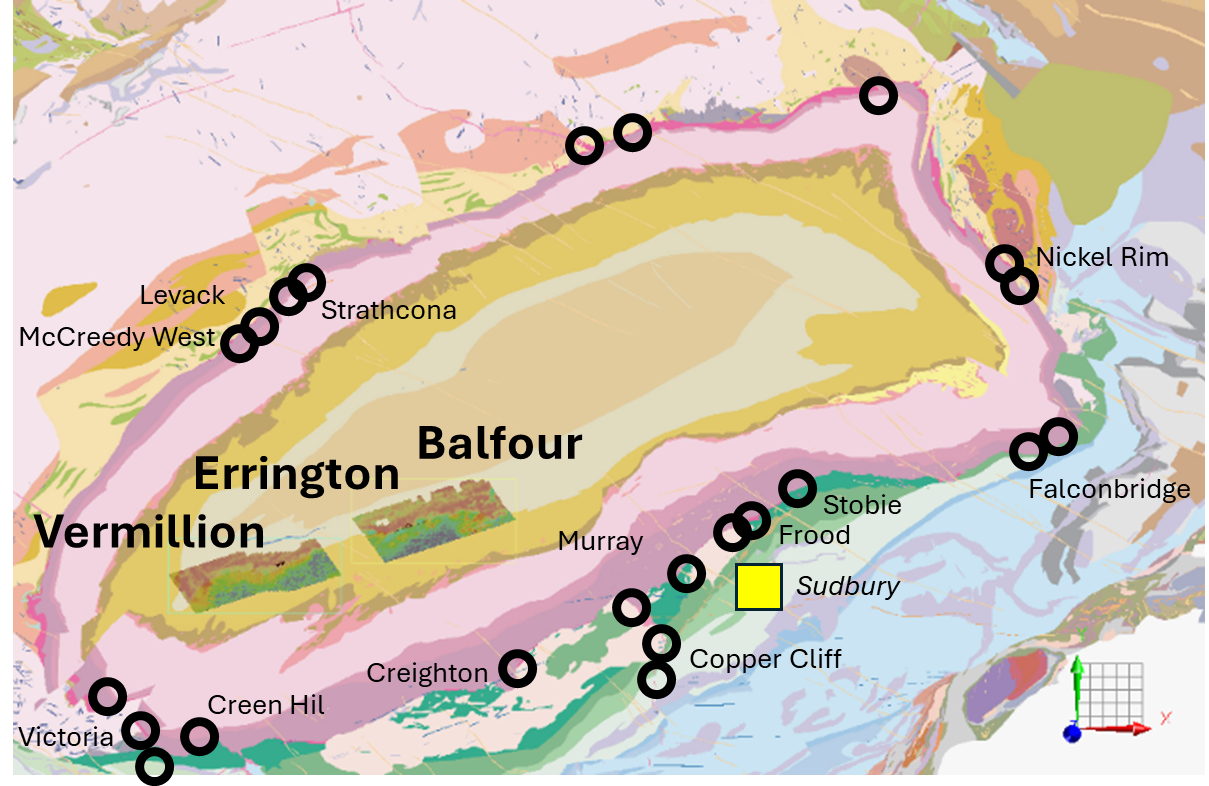
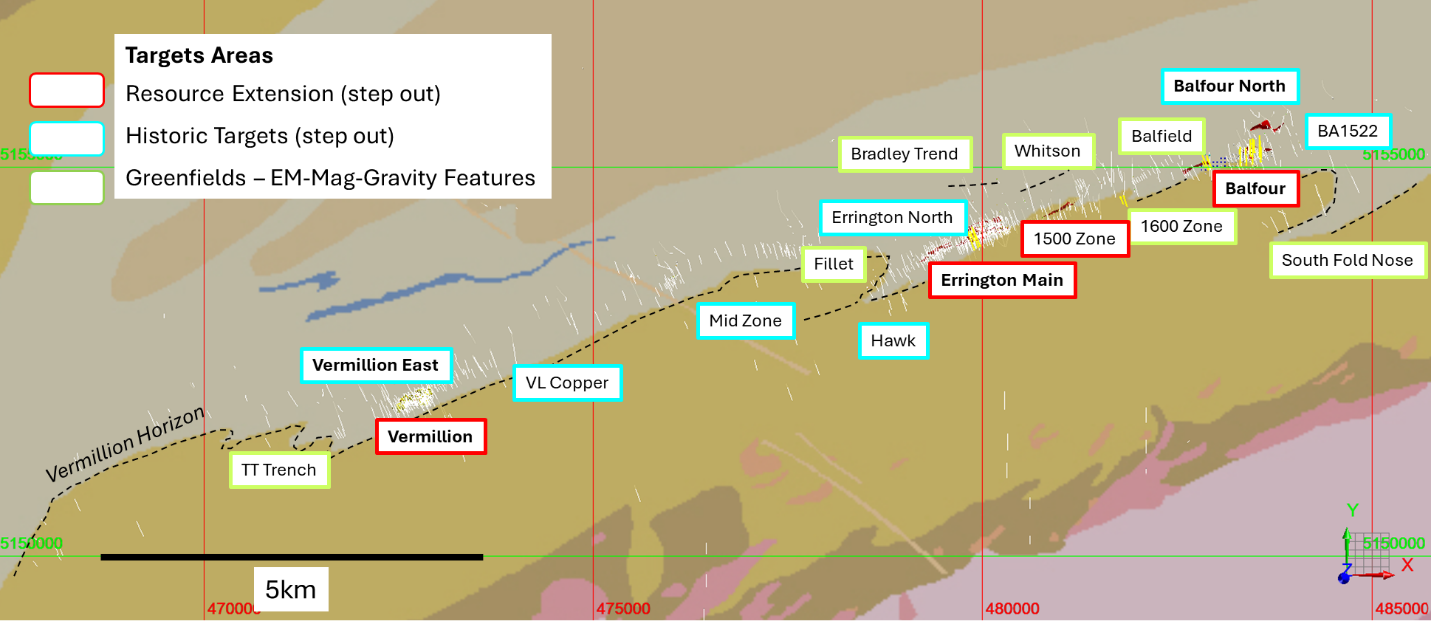
The Sudbury Mining District in Ontario, Canada is known for world-class nickel-copper-platinum group element mineral deposits with over 120 years of production. Copper-zinc-lead-gold-silver mineralization has been recognized in Sudbury, but systematic exploration for Volcanogenic massive sulfide (VMS) type mineralization has been limited. Two discrete mineralized centres, Errington and Vermillion, have been delineated and additional zones of mineralization have been identified across a 12.5 kilometre stratigraphic strike extent within the property including a third centre at Balfour. All three of Errington, Vermillion and Balfour centres remain open for potential expansion.
The property was held by Glencore Canada and its predecessors for over 50 years but has been dormant since 2014. Since acquiring the property in 2025, Errington Metals has initiated a >45,000-metre drilling and exploration program aimed at establishing a compliant resource base at Vermillion, Errington, and Balfour, as well as testing new target areas for similar styles of mineralization.
Location
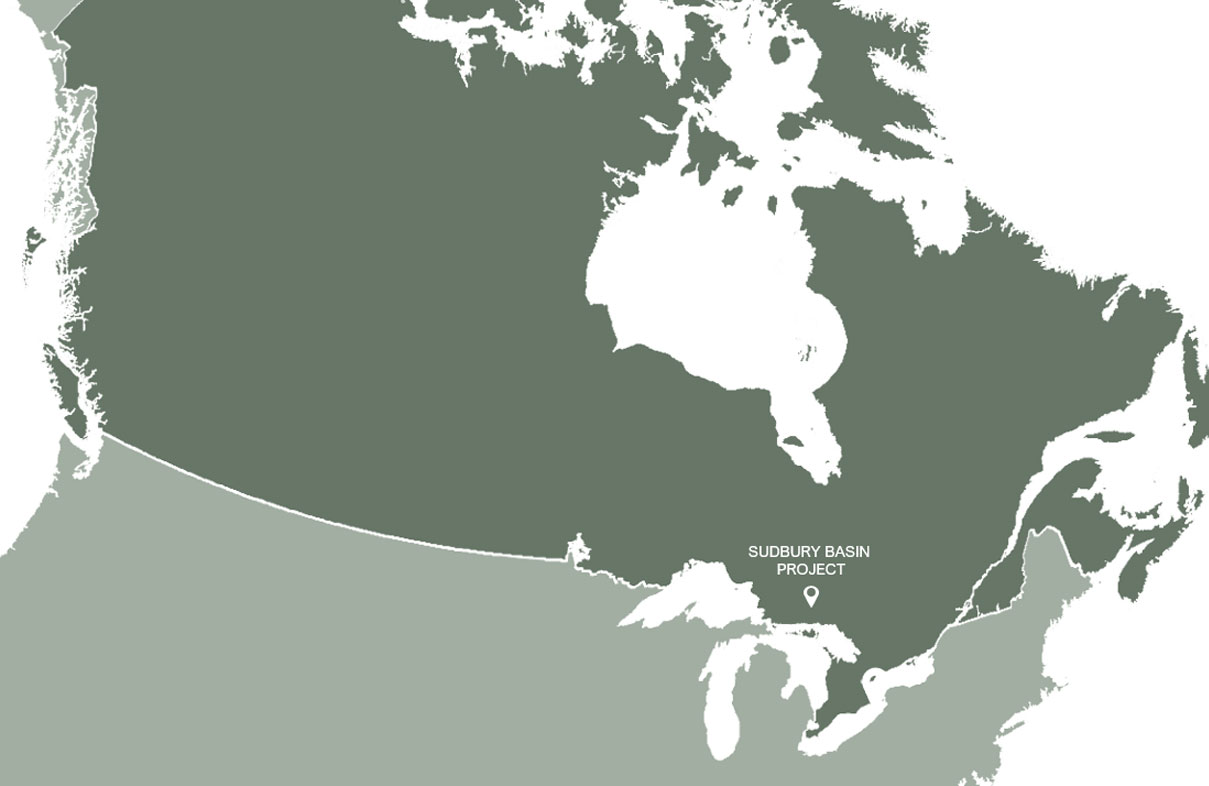
The Project is located approximately 25 km west-northwest of the city of Greater Sudbury, ON within the Sudbury Mining Division, and is centred at approximately 46°32′ N latitude and 81°18′ W longitude to the southwest of the nearby population centre of Chelmsford off of highway 144.
Land Package
The Property comprises a total of 114 mining patents, six (6) mining licenses of occupation, nine (9) single-cell mining claims and six (6) multi-cell mining claims, for a total surface area of 5,616.1 ha. The patents include a combination of mining rights only (38), surface rights only (3) and both mining and surface rights (73).
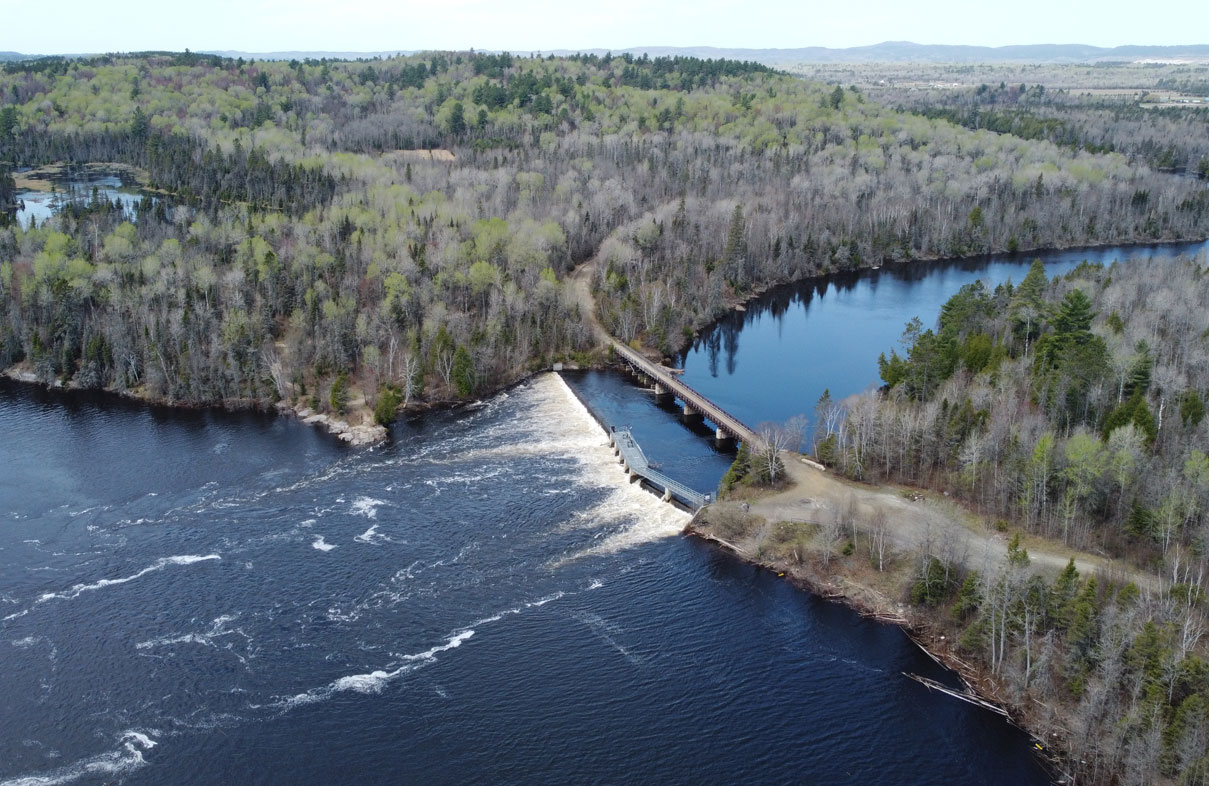
The Property can be accessed year-round by a combination of provincial highways, regional roads and gravel access roads in close proximity to the city of Greater Sudbury.
Work Program
Over 45,000 metres of diamond drilling has been planned to significantly expand the mineralized zones at Vermillion, Errington, and Balfour. In addition, several targets have been identified based on historic drilling and interpretations of airborne geophysical data. A property-wide 3D geological model has been constructed and is being continually updated using new data and geological extrapolations. A new compliant mineral resource estimate is also being developed.
Advanced mineralogical and metallurgical studies are ongoing to optimize copper, zinc, and lead recoveries, as well as to develop processes to extract gold and silver, both of which had not been systematically examined previously.
Geology & Mineralization
The geology of the Sudbury Mining District has been long studied and controversial over the genesis of the vast metal endowment in a relatively small area.
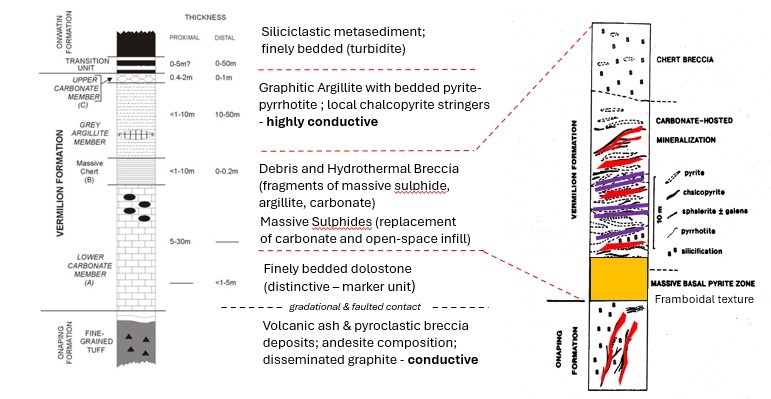
It is generally accepted the Sudbury Igneous Complex, host to the nickel-copper-platinum group element mineralization, formed due to a meteorite impact into an continental inland sea approximately 1.85 billion years ago. The resulting basin was infilled with debris from the impacted country rock, rock from ensuing volcanoes and sediment from the hinterland. Over 1400 metres of volcanic rock and intrusions, the Onaping Formation, accumulated within the basin forming the base of the copper-zinc-lead-gold-silver massive sulphide mineralization, The sulphide mineralization is stratabound; hosted by chert and carbonate rocks intercalated with argillte, the Vermillion Formation. Additional sediment occurs stratigraphically above the mineralized horizon as part of the infill sequence, the Onwatin Formation.
Despite the unique geological setting, the mineralization style is largely considered Volcanogenic Massive Sulphide style rocks due to the characteristic metal suite and by common features found in those elsewhere in the world such as widespread semiconformable hydrothermal alteration in the footwall rocks manifested as pyrhhotite mineralization and feldspar destruction; sodium depletion. Manganese-rich carbonate minerals and barite within the Vermillion Formation distal to the copper-zinc-lead-gold-silver mineralization is also consistent with VMS type seafloor hydrothermal systems.
Sulphide mineralization consists of very fine-grained and intimately mixed, massive or disseminated pyrite, sphalerite, chalcopyrite, galena, marcasite, minor amounts of pyrrhotite, as well as precious metals.